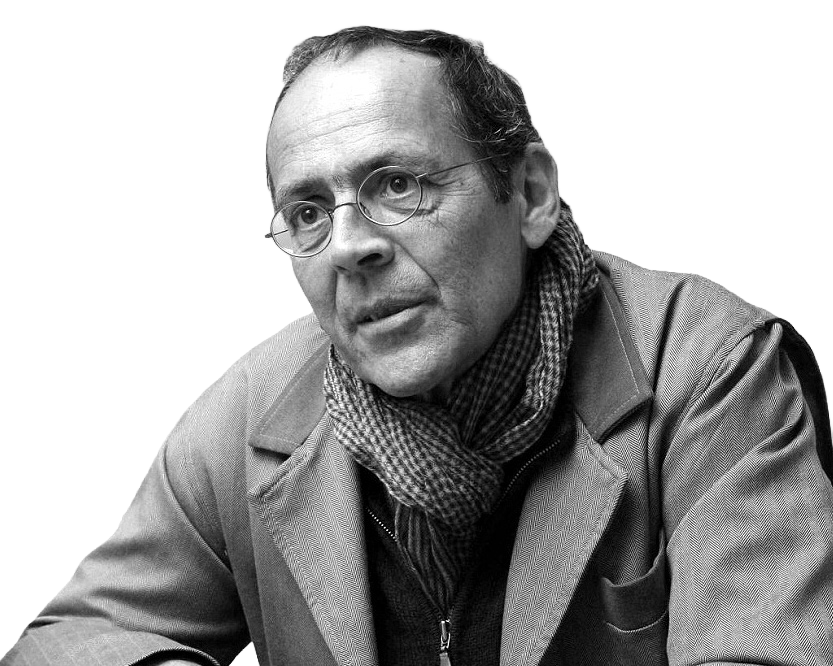
“Hence the digital denotes that which ties calculation to fabrication and fabrication to calculation, but which always assumes the surpassing of calculation, which is to say, precisely, the power of bifurcating, given that only knowledge, insofar as it takes care of the pharmakon and thereby surpasses the anthropic dimension of exosomatic organs and their organizations, is capable of reopening prospects and perspectives for the future.”
—Bernard Stiegler, The Nanjing Lectures
call for papers
The philosopher of technology, Bernard Stiegler, spent much of his academic career analysing the digital condition and the profound impacts of new technologies on society, politics and thought. In his work, he describes automation, the 24/7 working culture and uninterrupted online connectivity as having provoked a generalised proletarianisation, or the widespread loss of pragmatic and conceptual intelligence and intuition. This is not to say that machine learning technologies have made no positive contributions to society. The problem, for Stiegler, lies rather in the unrestrained development and deployments of digital technologies, which now present us with unprecedented challenges in terms of knowledge and power asymmetries, as well as posing serious risks to the long-term sustainability of the natural environment. Noetic reticulation, or the short-circuiting of thought as such, has also seen the widespread disruption of critical reflection, attention and genuine knowledge production outside the prefabricated conditions of algorithmic governmentality - a probabilistic data-driven form of social governance - which is having profound consequences on the welfare of societies, human psychology and political institutions.
A generalised denoetisation is, moreover, a problem of temporality, specifically the ways in which the spatialisation of temporal processes have become digital or discrete. This is already evident when punctuation is introduced into writing systems, now acting as a discretising spatial marker for the separation, organisation and flow of time and meaning into discrete units like letters and sentences. Stiegler is well aware that such discretely organised tertiary retentions or externalised memory - whether through writing, printmaking, toolmaking or artefacts - is the very condition for collective being. It is precisely epiphylogenetic memory 'that constitutes the possibility of what we today call culture, and which is the unthought ground' of 'the science of spirit', or then, libidinal economy (Stiegler, 2020: 48). What is at stake, in the era of Big Data and cognitive infrastructures, is the subsumption of our investments of desire into the automated syntheses of what Yuk Hui calls 'tertiary protentions', which have become amplified by recursive optimisation and predictive performance.
The dilemma, it would seem, is how to reach the outside of thought, how to have thought from outside the coordinates of what Dan McQuillan calls 'AI realism', riffing on Mark Fisher's notion of 'capitalist realism' - a failure to think otherwise, or beyond the limits of capitalist thought structures. It is, to put it in Stiegler's terms, a question of noetisation, which is irreducible to the brain, or even the mind, concerning instead the pharmacological condition of our technical becoming as 'itself a process of individuation that both supports and threatens psychic and collective individuation' - the veritable binding of the drives. Given this, how can the pharmakon be safeguarded from retuning the noetic soul to temporal and spatial entropy? How can it instead become the condition for negentropy, which here implies both a temporal deferment and a spatial differentiation of entropy?
With these threads in mind, we ask contributors to think about Stiegler's notion of pharmacology in relation to theories and practices of rewilding, which we understand as radically contrasted to the pervasive extractivist logic of the digital condition and its associated practices of data harvesting, resource consumption, technocratic control, algorithmic modulation and a generalised denoetisation. Originally used in wildlife and botanical conservation contexts to describe the restoration of habitats and the creation of corridors between preserved lands for the rebounding of declining animal and vegetal populations, we transpose the notion of rewilding to philosophy to provoke imaginative and riotous dreamscapes for the restoration of our mental, social, technical and environmental ecologies. In particular, we are interested in papers that conceptualise pharmacology and rewilding in terms capable of moving against the shallow attention of artificially encoded forms of industrialised memory and proletarianised human desire that destroy the very potential for a pharmacology of mind and the production of negentropic knowledge - a counter-tendency to the accelerated entropic effects of the Anthropocene and the techno-capitalist apparatus.
Potential themes and provocations
- How pharmacology and rewilding can curb or interrupt the algorithmic curation of political interests and the intensification of certain beliefs about the world.
- How being very online affects our abilities to pharmacologically care for and sustain the natural environment.
- Links between pharmacology, rewilding and what Yuk Hui calls cosmotechnics, or a 'politics to come.'
- Pharmacological rewilding as anti-fascism - in the vein of, for example, Dan McQuillan's arguments in Resisting AI: An Anti-fascist Approach to Artificial Intelligence (2022).
- Pharmacological rewilding as a movement towards 'degrowth', decomputing and de-automatisation.
- The effects on our capacities for deep attention when every thought process is mined for rapid subsumption into regimes of knowledge extractivism.
- The consequences of pervasive disaffection - or the reduced ability to experience pleasure other than the low affective dopamine hits provided by endless scrolling - on future generations.
- What ensues when we pay attention to and take care of - or then rewild - our digitally inflected pharmacological ecologies.
- How we can use the concepts of rewilding and pharmacology to produce Global South specific conceptual frameworks and tools for grappling with contamination and care.
- The ways in which rewilding and pharmacology could ameliorate existential dread through collective meaning-making.
- Pharmacology and rewilding as medicinal ingredients of Stiegler's apothecary for noesis, individuation and transindividuation.
- The role of creative practices for thinking about and demonstrating the rewilding of technologies.
registration
Please pay the conference fees by 5 October 2026 and register here by 10 October 2026: https://forms.gle/w6Jnp15GbFnTgR9BA.
If you need an invoice, please email the following information to Mrs Nicolene Marks at nmarks@uj.ac.za:
- Name of customer: you, your university
- VAT registration number: your university's VAT / tax number
- Bill to address: your university address
- Bill to address code: your university address postal code
- Customer contact person: your details & the details of the person dealing with the finances
- Customer telephone number: your contact details & the contact details of the person dealing with the finances
- Customer contact person e-mail address: your contact details & the contact details of the person dealing with the finances
Banking details:
Account holder/name: University of Johannesburg
Nedbank current account number: 1454094206
Branch name: Khayelitsha Mall
Branch code: 198765
Swift code: NEDZSAJJ
Please use the following as reference and send proof of payment to Mrs Nicolene Marks at nmarks@uj.ac.za: 05-05-003610-20-16700 (Conference fees_Your surname)
Please send all other queries to pharmakon2026@gmail.com and cc Mrs Nicolene Marks at nmarks@uj.ac.za.
We look forward to seeing you soon!
conference fees
Includes two nights' accommodation and all meals.
International participants: €400
Associate and Full Professors: R6,000
Lecturers and Senior Lecturers: R4,500
Postdoctoral Fellows: R2,500
Postgraduate Students: R500.00
venue
Misty Hills, Muldersdrift, South Africa
dates
19-21 November 2026
keynotes

Joff Bradley
Prof. Joff P. N. Bradley is a faculty member at the Graduate School of Foreign Languages at Teikyo University, Tokyo. He has edited and co-edited several collections on education, including Educational Philosophy and New French Thought, Educational Ills and the (Im)possibility of Utopia and three volumes on Bernard Stiegler and the Philosophy of Education. He is also co-editor of On Critical Postmedia and Korea : Philosophy, Technology, Literature.Joff's articles on Stiegler include:
- Stiegler as philosopher of education
- Stiegler Contra Robinson: On the hyper-solicitation of youth
- On the organology of utopia: Stiegler's contribution to the philosophy of education
- On the curation of negentropic forms of knowledge
- Negen-u-topic becoming: On the reinvention of youth
- Bernard Stiegler, philosopher of reorientation
project members
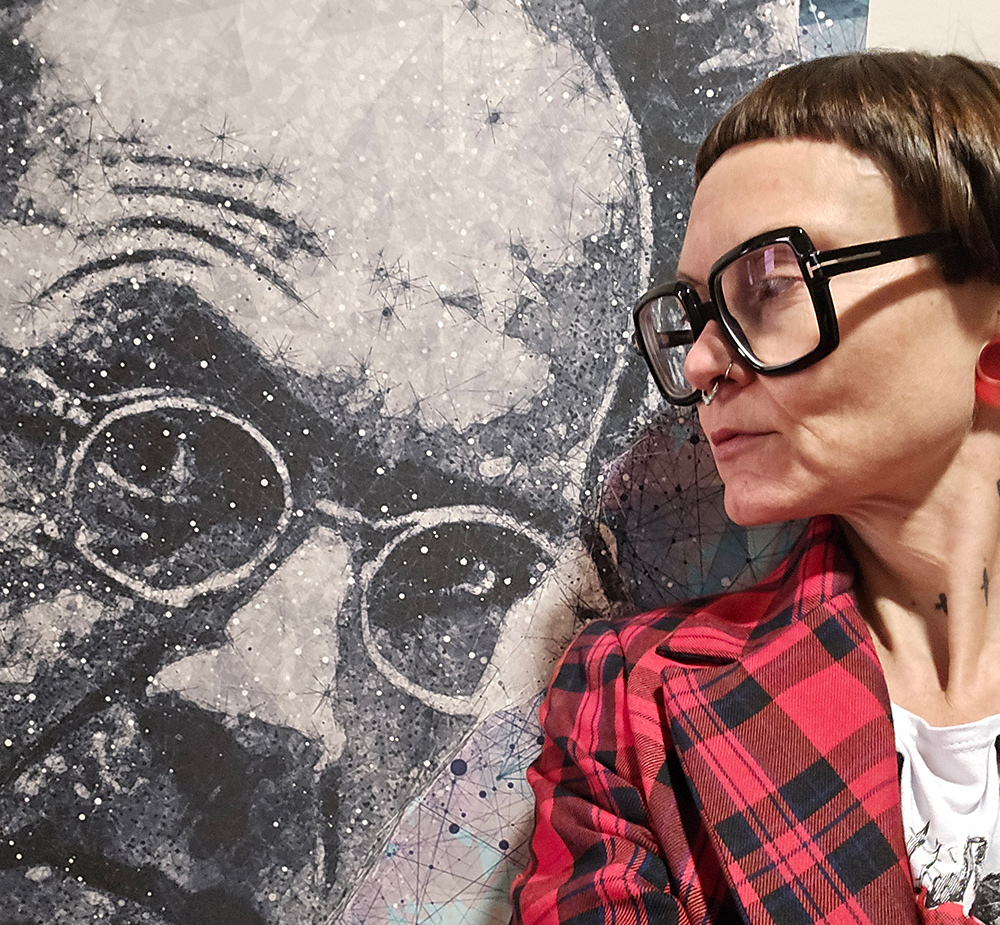
Prof. Chantelle Gray (organiser)
Chantelle Gray (PhD) is a Professor in the Department of Philosophy at the University of Johannesburg, South Africa. Her research focuses on developing theoretical frameworks and artistic practices that take care of humans, technologies and socio-political ecologies in the digital age. She is an editorial board member of Somatechnics and Humanities and Social Sciences Communications, and the Editor-in-Chief of the South African Journal of Philosophy. Her books include Deleuze and Anarchism (2019) and Anarchism after Deleuze and Guattari: Fabulating Futures (2022). Chantelle is currently writing a book of the philosophy of Bernard Stiegler, and has written several articles on his work, including:- A memory bank of the future: Stiegler, education and the gesture of care
- Algopopulism and recursive conduct: Grappling with fascism and the new populisms vis-à-vis Arendt, Deleuze and Guattari, and Stiegler
- Ubuntu: Be-ing Becoming (Capable of Being Affected)
- Doing academia differently: Taking care of humans, technologies and environments in the digital age
- Fabulation in a time of algorithmic ecology: making the future possible again
Chantelle is also a member of the Sonic Exploration Network of Southern Africa and releases music on their label and on Bandcamp.




The launch of this project was made possible by URC funding from the University of Johannesburg.
programme
coming soon